
When planning a new driveway, car park, or road surface, one of the most common questions we’re asked is: tarmac vs asphalt – which is better? While the two terms are often used interchangeably, they are not exactly the same. Understanding the difference can help you make a more informed decision for your project, whether you’re a homeowner or managing a large commercial site.
At Edwards Surfacing, we’ve spent decades working with both materials across a wide range of applications. In this guide, we’ll clearly explain the differences between tarmac and asphalt, covering composition, use cases, durability, and cost, so you can choose the right solution with confidence.
What Is Tarmac?
Tarmac, short for tarmacadam, originates from the earlier concept of macadam, a road-building method developed in the 19th century. Traditional macadam involved compacted layers of crushed stone, but tarmac evolved by binding those stones together with tar.
A typical tarmac road consists of crushed aggregate coated in tar, which acts as the binding agent. While modern tarmac is less commonly used on large-scale roads today, it still plays an important role in certain surfacing applications.
Tarmac is known for its smooth finish and relatively quick installation process. It is particularly popular for domestic driveways and smaller projects where cost-effectiveness and speed are key considerations.
What Is Asphalt?
Asphalt, on the other hand, uses bitumen rather than tar as the binding agent. Bitumen is a by-product of crude oil refining, making asphalt a more modern and widely used surfacing material.
The composition of asphalt is carefully controlled, combining aggregates such as sand, gravel, and crushed stone with bitumen. This creates a durable and flexible surface that can withstand heavy traffic and varying weather conditions.
Because of its strength and longevity, asphalt is commonly used for roads, motorways, and commercial surfaces. It is also increasingly used as asphalt for footpaths, where a smooth and durable finish is essential.
Tarmac vs Asphalt: Composition Differences
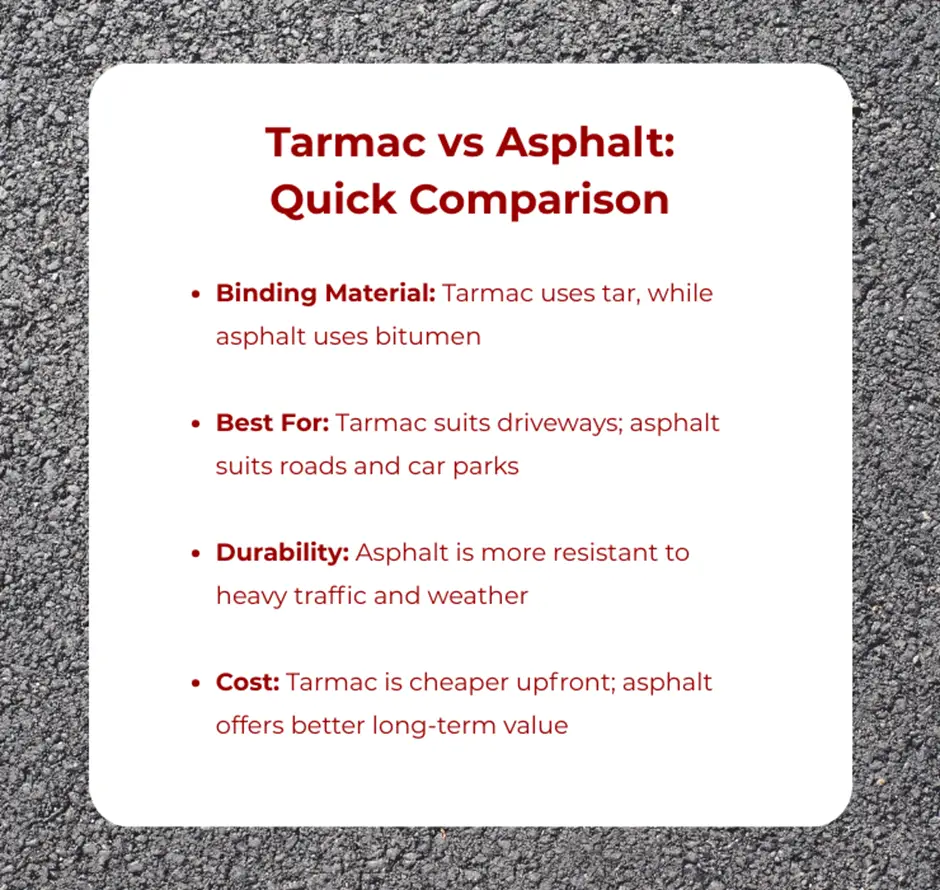
The main difference between tarmac vs asphalt lies in the binding material. Tarmac uses tar, while asphalt uses bitumen. Although they may look similar once laid, their performance characteristics differ significantly.
Tar-based tarmac tends to be softer and less resistant to heat. This means it can become sticky in high temperatures and may not handle heavy traffic as well over time. Asphalt, with its bitumen binder, offers greater resistance to deformation and is better suited to high-traffic environments. Modern surfacing projects often favour asphalt because of its consistency and improved performance, especially in commercial and public settings.
Use Cases: Where Each Material Works Best
Choosing between asphalt or macadam tarmac surfacing depends largely on how the surface will be used.
For residential projects, tarmac remains a popular option. It is well-suited to driveways, pathways, and areas with light to moderate use. Its affordability and quick installation make it an attractive choice for homeowners looking for a practical solution.
Asphalt, however, is typically preferred for larger or more demanding applications. Car parks, access roads, and commercial premises benefit from asphalt’s durability and ability to withstand heavier loads. It is also the material of choice for public infrastructure, including roads and footpaths.
When considering asphalt for footpaths, its smooth finish and long-lasting nature make it ideal for pedestrian use, reducing maintenance needs over time.
At Edwards Surfacing, we regularly advise clients on the best material for their specific project, ensuring the chosen surface delivers both performance and value.
Durability and Longevity
Durability is one of the most important factors when comparing tarmac and asphalt. While both materials are designed to provide a solid and reliable surface, asphalt generally offers superior longevity.
Tarmac surfaces can last for many years when properly maintained, but they are more prone to wear and tear, particularly in areas exposed to heavy traffic or extreme weather conditions. Cracking and softening can occur over time, especially during hot summers.
Asphalt, by contrast, is engineered to be more resilient. Its composition allows it to flex under pressure, reducing the likelihood of cracks forming. This makes it particularly suitable for commercial environments where durability is essential.
For clients seeking a long-term investment with minimal maintenance, asphalt often proves to be the more cost-effective choice in the long run.
Installation and Maintenance
Another key consideration in the tarmac vs asphalt debate is how each material is installed and maintained.
Tarmac is generally quicker to lay and can be used sooner after installation. This makes it ideal for projects where time is a critical factor. Its simpler composition also means it can be easier to repair in smaller sections if needed.
Asphalt installation, while slightly more complex, results in a more robust surface. It requires careful preparation and precise application, but the end result is a high-quality finish that stands up well to heavy use.
In terms of maintenance, both surfaces benefit from regular care. However, asphalt typically requires less frequent repairs due to its durability. Over time, this can reduce overall maintenance costs and disruption.
Cost Considerations
Cost is often a deciding factor for both residential and commercial clients. Tarmac is usually the more affordable option upfront, making it appealing for smaller budgets or projects with limited scope.
However, it is important to consider the total lifecycle cost. While asphalt may have a higher initial price, its longer lifespan and reduced maintenance requirements can make it more economical over time.
For example, a driveway or small access road may be perfectly suited to tarmac, offering excellent value for money. On the other hand, a busy car park or commercial site may benefit more from asphalt, where durability and performance outweigh the initial investment.
At Edwards Surfacing, we work closely with our clients to balance budget considerations with long-term performance, ensuring the best possible outcome for every project.
Environmental and Practical Factors
Modern surfacing decisions also take environmental and practical factors into account. Asphalt is often considered more environmentally friendly because it can be recycled and reused in future projects.
Additionally, asphalt’s smoother finish can contribute to reduced noise levels and improved driving conditions. This makes it a preferred choice for roads and urban environments.
Tarmac still has its place, particularly in smaller-scale applications where its simplicity and cost-effectiveness are advantageous. The key is selecting the right material for the specific requirements of the project.
Making the Right Choice
Ultimately, the choice between tarmac and asphalt comes down to the needs of your project. There is no one-size-fits-all answer, but understanding the differences can help guide your decision.
If you are working on a residential driveway or a light-use area, tarmac may provide a practical and budget-friendly solution. For larger, high-traffic, or commercial applications, asphalt is often the better choice due to its durability and long-term value.
With decades of experience in asphalt or macadam tarmac surfacing, we understand that every project is unique. That’s why we take the time to assess your requirements and recommend the most suitable material for your needs.
Speak to Our Surfacing Experts
If you’re unsure whether tarmac or asphalt is right for your project, we’re here to help. At Edwards Surfacing, we provide expert advice and high-quality workmanship across residential and commercial surfacing projects.
Get in touch with our team today to discuss your requirements and receive a tailored recommendation that ensures your surface performs for years to come.